
Our Latest Articles
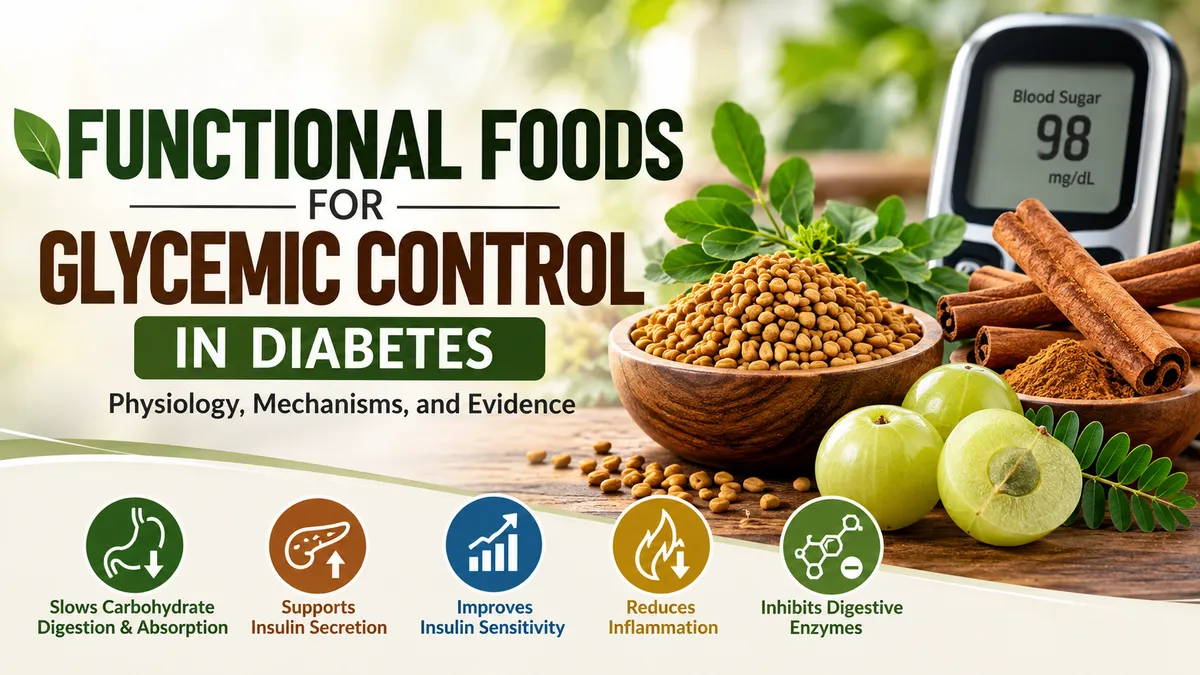
Functional Foods for Glycemic Control in Diabetes: Physiology, Mechanisms, and Evidence
Functional Foods for Glycemic Control in Diabetes: Physiology, Mechanisms, and Evidence
Review article prepared by Tuba Mateen, Student of M.Sc Clinical Nutrition and Dietetics -Internship Assignment
Overview: Why These Foods Work
T2DM is characterized by elevated blood glucose levels due to insulin resistance and/or deficiency. Blood glucose levels can also be impacted by the rate of gastric emptying and the rate of digestion/absorption of dietary carbohydrates. The functional foods listed below incorporate multiple physiological mechanisms to improve blood glucose levels. They may also benefit individuals without diabetes who have post-meal blood glucose spikes.
Physiological Mechanisms
Decreased rate of digestion/absorption of dietary carbohydrates. Soluble fibers can slow the emptying of the stomach and can decreased the rate of absorption of blood glucose.
Inhibition of digestive enzymes. The absorption of dietary carbohydrates can be inhibited by the inhibition of enzymes that break down carbohydrates in the digestive system.
•Increased insulin secretion.
•Improved insulin signaling.
•Anti-inflammatory effects.
•Improved insulin sensitivity.
The remaining information in each food section describes the physiological mechanism and provides the clinical evidence.
🌿 Fenugreek / Methi
Physiology & Mechanism
The soluble fiber i.e. galactomannan found in fenugreek is a thick, viscous fiber that thickens the contents of the bowel (intestine) prevents the digestion of the food by making the gastric emptying to be slow and also causes the physical delay in absorption of glucose using intestinal wall.
The seeds contain 4-hydroxyisoleucine; a rare amino acid. it’s reported to be an insulin secretagog, and enables stimulated glucose-dependent insulin release in direct response from pancreatic β-cells without causing hypoglycaemia in the normoglycemic state. Fenugreek saponins also seem to improve peripheral insulin sensitivity and inhibit intestinal α-glucosidases to slow carbohydrate digestion. The reported rise in adiponectin (Study 1) is impressive as adiponectin improves insulin sensitivity of the liver and muscle, plus possessing anti-inflammatory capabilities which perhaps may be the explanation in part, for the reduction in HOMA-IR.
Evidence
Study 1: Effect of Fenugreek Seeds on Serum Metabolic Factors and Adiponectin Levels in Type 2 Diabetic Patients Triple-blind RCT, 88 T2DM patients, 10 g/day powdered fenugreek seeds for 8 weeks. Significant reductions in fasting blood glucose, HbA1c, insulin, and HOMA-IR vs. placebo. https://pubmed.ncbi.nlm.nih.gov/26098483/
Study 2: A simple dietary addition of fenugreek seed leads to the reduction in blood glucose levels RCT, 60 T2DM patients, 10 g fenugreek seeds soaked in hot water daily as an adjunct to standard care, with fasting glucose and HbA1c monitored over six months. https://pubmed.ncbi.nlm.nih.gov/29861588/
🪵 Cinnamon
Physiology & Mechanism
Insulin mimicking effects: the active component in cinnamon (cinnamaldehyde, and other polyphenols such as methylhydroxychalcone polymers) mimics insulin by increasing autophosphorylation of the insulin receptor and triggering downstream kinase activation of the insulin-signalling pathways, resulting in translocation of the GLUT4 transporters to the cell membrane in muscle and fat cells (GLUT4 inducing cellular influx of glucose).
Another mechanism is the inhibition of α- glucose and α- amylase, the enzymes that digest the starchy foods we eat into broken down sugars that are then taken up by the blood. Cinnamon because of this can slow down our post-meal rises in blood sugars. Because these compounds are rich in polyphenol contents and have antioxidant properties, they may also have the effect of protecting the pancreatic β-cells from oxidative damage soon, which would be in keeping with the decrease in HbA1c that has been maintained in the 90-day and 12-week trials. (If HbA1c denotes mean glycemia over ~ three months then we would expect to see long-term destruction in the labelling of it)
Evidence
Study 1: Effectiveness of cinnamon for lowering HbA1C in patients with type 2 diabetes RCT, 109 T2DM patients, 1 g cinnamon/day for 90 days plus usual care. HbA1c decreased more than with usual care alone. https://pubmed.ncbi.nlm.nih.gov/19734396/
Study 2: Glycated haemoglobin and blood pressure-lowering effect of cinnamon Randomized, placebo-controlled, double-blind trial, 58 T2DM patients, 2 g cinnamon/day for 12 weeks. HbA1c fell from 8.22% to 7.86%. https://pubmed.ncbi.nlm.nih.gov/20854384/
Study 3: Three-month randomized, triple-blind, placebo-controlled trial evaluating cinnamon as adjuvant treatment for glycemic control in T2DM. https://pubmed.ncbi.nlm.nih.gov/33605836/
Amla — Phyllanthus emblica / Emblica officinalis
Physiology & Mechanism
Extremely high concentrations of vitamin C and hydrolyzable tannins/polyphenols (emblicanin A and B) gives Amla extremely high antioxidant capacity Chronic hyperglycaemia causes production of reactive oxygen species (ROS) which causes damage to pancreatic -cells and impairs endothelial nitric-oxide signalling – a key cause of both progressive loss of insulin secretion and diabetic vascular disease. Amla’s antioxidant load removes this ROS – accounting for the correlation of improvement in markers of endothelial dysfunction with glycemia. Amla polyphenols have shown -glucosidase inhibitory activity (delaying digestion of carbohydrate foods) in vitro – and potentially modestly improve insulin sensitivity in the peripheral tissues.
Evidence
Study 1: A randomized controlled trial of Emblica officinalis in type 2 diabetes mellitus Reported a significant reduction in fasting and 2-hour postprandial blood glucose. https://pubmed.ncbi.nlm.nih.gov/21495900/
Study 2: Hyderabad trial (Nizam’s Institute of Medical Sciences) — amla extract associated with improved HbA1c and markers of oxidative stress and endothelial function. https://pubmed.ncbi.nlm.nih.gov/23935377/
Karela / Bitter Gourd — Momordica charantia
Physiology & Mechanism
Bitter gourd contains 3 different types of compounds that are said to have this effect: Charantin, a steroidal saponin mixture with insulin-mimetic activity. Polypeptide-p (p-insulin), a plant polypeptide similar to bovine insulin that seems to have insulin-like effects. Momordicin, associated with stimulating insulin secretion from the pancreas (as an insulin secretagogue).
Extracts of bitter gourd have also been shown to stimulate muscle cells’ AMPK (AMP-activated protein kinase), a cellular ‘fuel gauge’ that promotes GLUT4 translocation and glucose uptake independently of insulin 24,25 – which might be why we saw increases in insulin secretion in Study 1 instead of increases in insulin sensitivity alone.
The different results seen in Study 2, on borderline overall, but significant in non-responders to medication, points to this supplement’s potential role as an additional therapy when insulin secretory capacity is more impaired.
Evidence
Study 1: Momordica charantia Administration Improves Insulin Secretion in Type 2 Diabetes Mellitus RCT, 2,000 mg/day for 3 months. Reduced HbA1c, 2-hour glucose, glucose AUC; increased insulin secretion. https://pubmed.ncbi.nlm.nih.gov/29431598/
Study 2: mcIRBP-19 bitter-gourd extract, RCT, 40 T2DM patients. Overall effect borderline; subgroup of medication non-responders showed significant reductions in fasting glucose and HbA1c.
https://pubmed.ncbi.nlm.nih.gov/35140559/
🌾 Barley / β-Glucan
Physiology & Mechanism
Beta-glucan is a highly viscous soluble fibre and in the gut it forms a gel-like matrix that:
Because it slows down the emptying of the stomach, glucose moves into the small intestine more slowly.
Prevents the diffusion of digestive enzymes and glucose molecules towards the intestinal brush border, thus slowing down their absorption.
It is turned into short-chain fatty acids (SCFAs), especially propionate, by bacteria in the colon, which in turn suppresses hepatic gluconeogenesis and causes GLP-1 to be secreted by the intestinal L-cells — this leading to an increased release of insulin that is glucose-dependent.
That is why the effect of barley is most clearly seen in the postprandial glucose AUC and the postprandial insulin response rather than in fasting glucose alone—because it mainly reduces the rate at which glucose appears after a meal rather than affecting baseline metabolism.
Evidence
Study 1: High β-glucan barley mixed 50% with white rice in 10 T2DM patients — significantly lower postprandial glucose incremental AUC and reduced postprandial insulin response vs. white rice alone. https://pubmed.ncbi.nlm.nih.gov/32095447/
Study 2: Randomized crossover trial, 20 adults with T2DM — high-amylose barley bread reduced 4-hour postprandial glucose response by 34% vs. wheat bread. https://pubmed.ncbi.nlm.nih.gov/37940671/
🌰 Tree Nuts — Especially Almonds
Physiology & Mechanism
Almonds influence glycemic control through several additive mechanisms rather than one dominant pathway:
The high fat and fiber content delay the emptying of the stomach and reduce the rises in blood glucose and insulin that occur after eating higher-glycemic-index carbohydrate foods, whether they are eaten together or are used as a substitute.
Magnesium is a necessary cofactor for the enzymes involved in the insulin-signaling cascade (this includes the tyrosine kinase activity of the insulin receptor); a large number of people with type 2 diabetes mellitus are magnesium deficient, and correcting this deficiency is linked to a moderate improvement in insulin sensitivity.
Replacing refined carbohydrates with monounsaturated fat in the diet results in a lower overall dietary glycemic load.
The polyphenols found in almond skins have a weak antioxidant action which might help to protect against oxidative stress of the beta cells.
The fact that the effect is more noticeable in patients with a baseline HbA1c of ≤8% (Study 2) indicates that almonds are most effective when used as a supplementary measure in earlier stages of diabetes, particularly in cases where the disease is well controlled, rather than being used as a primary treatment in advanced disease.
Evidence
Study 1: Randomized crossover trial, 20 T2DM patients, ~60 g almonds/day — improvements in several metabolic parameters. https://pubmed.ncbi.nlm.nih.gov/20580779/
Study 2: Randomized crossover controlled feeding trial in Chinese T2DM patients, ~60 g/day almonds — among those with baseline HbA1c ≤8%, fasting glucose fell 5.9% and HbA1c fell 3.0% vs. control diet. https://pubmed.ncbi.nlm.nih.gov/28785295/
Study 3: 24-week intervention, New Delhi, Asian Indians with T2DM — significant HbA1c improvement plus improvements in several cardiovascular-risk parameters. https://pubmed.ncbi.nlm.nih.gov/28051354/
🌱 Chia Seeds
Physiology & Mechanism
Chia seeds are rich in soluble fiber (mucilage) that forms a viscous gel in water, theoretically slowing gastric emptying and glucose absorption similarly to β-glucan. They are also a major source of alpha-linolenic acid (ALA), a plant omega-3 fatty acid with anti-inflammatory properties that could, in principle, improve insulin sensitivity over time.
Despite this plausible mechanism, the cited trial did not find significant improvement in glucose, HbA1c, insulin, or lipids — only systolic blood pressure improved significantly. This is a useful reminder that a biologically plausible mechanism does not guarantee a clinically measurable glycemic effect at the dose and duration tested; the blood-pressure benefit may instead reflect the ALA/fiber combination acting on vascular tone and sodium handling rather than glycemic pathways.
Evidence
RCT, 42 adults with T2DM, 40 g/day chia seeds for 12 weeks. No significant difference in glucose, HbA1c, insulin, or lipids; systolic blood pressure decreased significantly. https://pubmed.ncbi.nlm.nih.gov/33530854/
🌱 Flaxseed
Physiology & Mechanism
The effect on glycemic parameters of flaxseed is mainly due to the lignans, especially secoisolariciresinol diglucoside (SDG), that after metabolism of the compound by intestinal flora to enterolignans, namely enterodiol and enterolactone, possess antioxidant and slight phytoestrogen properties that lead to improvement of function of pancreatic beta cells and reduction of inflammation at the low-grade level and hence explain the lowering effect on HbA1c level without significant lowering of the levels of fasting glucose or insulin resistance.
Flaxseed is also rich in soluble mucilage fiber, as shown in the study with flaxseed-yogurt, and ALA omega-3 fats with anti-inflammatory properties similar to those of chia.
Evidence
Study 1: Randomized double-blind crossover trial, 73 T2DM patients, flaxseed-derived lignan supplement vs. placebo — significant improvement in HbA1c; fasting glucose and insulin resistance unchanged. https://pubmed.ncbi.nlm.nih.gov/17987126/
Study 2: RCT, 57 T2DM patients, yogurt containing 30 g flaxseed/day for 8 weeks. https://pubmed.ncbi.nlm.nih.gov/31720254/


Quick Links
Home
About Us
Courses
FAQ
Services
Testimonals
Blogs
Courses Offered
Diabetes Reversal Course
Residential Detox Course
T1DM Management Course
Weight loss Therapies
Detox Camps
© Deepak Kumar 2026 All Rights Reserved.